How do you 'turn' yours? See the new Fendt solution...
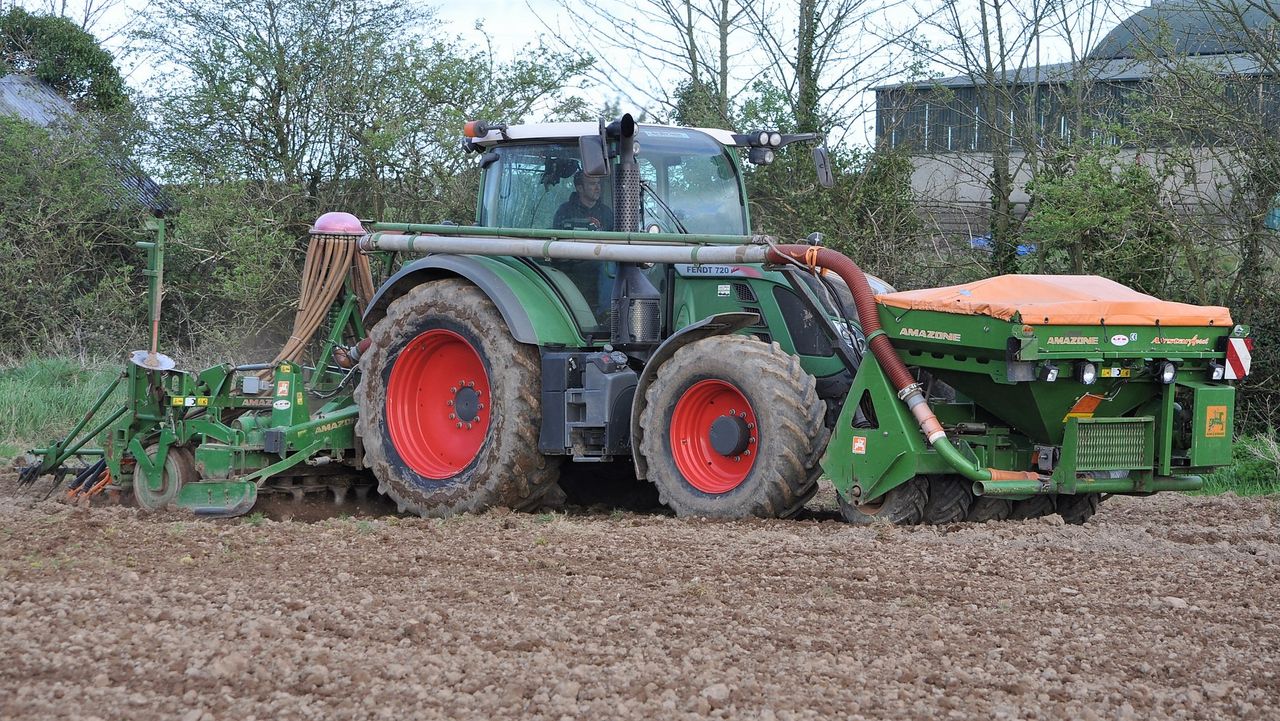
Automatic guidance and steering systems have sometimes struggled to master the troubled 'headland turn'.
Even those systems that do promise a workable solution are typically limited to simple headland manoeuvres - for example; enabling a tractor or harvester to complete a 'pass', turn in a generously-proportioned arc and start the next 'pass'.
Fendt reasons that this is not always practical. The company says that some jobs require a tighter or different type of turn.
A spokesperson explained: "All available systems for automatic turning currently execute the manoeuvre when moving forward and are, therefore, ideal for drawn implements.

"The current turn types do, however, have their limits in practice. The keyhole turn needs a large headland to drive on after turning. When performing a U-turn, the headland can be much smaller, because rows are bypassed, but then the implement cannot finish the row in a straight line."

"Our new Variotronic Turn Assistant now also offers a reverse turn in two different versions - the Y-turn and the K-turn. These two turn types, with a direction change, have a number of advantages in practice.
"Firstly, an automatic turn can be executed even on smaller structures. Automated turns are also an option for three-point mounted implements - if you need to finish a row in a straight line."
According to Fendt, the driver enters all relevant parameters on the operator's terminal - including the required turn type and the headland size. The system works in conjunction with 'headland management'.
Fendt says that the Y-turn is common. On entering the headland, the sequence starts automatically. The machine brakes and reverses; reversing is done automatically via cruise control. The machine then runs "seamlessly" back into the next 'pass'.
The K-turn is a "special type" of reverse turn; it's better suited to turning on slopes (enabling a tractor with a rear-mounted implement to climb while reversing, for example).
The benefit, says Fendt, is that even relatively inexperienced drivers can drive precisely and identically - without overlapping or errors.